I admit to being disgusted at Kenny for having the new video camera set up on 4K and ultra slow motion when we went to see Crab Orchard Creek. All that time waiting to see those lovely aquamarine waters and boom! Just like that... ruined.
I blame myself for not knowing and not checking more closely.
I wanted a do over, but we were watching our granddaughter Tessa for the next couple days. I put my mind to where we might see more pretty green waters?
I knew Tessa was not going to like a long, long ride and honestly neither did we. I remembered how long it had been since we visited Dogwood to go riding.
I had gotten a couple shots of Fall Branch looking especially pretty one Spring.
I reasoned that we'd had ample rain for the rivers to be flowing. Yet it being Winter hopefully the creeks would look like snow water. I talked it over with Kenny and he was game. We asked Tessa if she wanted to go and she liked the idea. We set off in the direction of Ozone Falls from home.
Once at Ozone we unloaded and took the RZR round to where Fall Branch flows out from behind Ozone Falls State Natural Area. I wanted to get some better photos of the Umbrella Rock and its little shack by the road. I wanted to get photos and video of Fall Branch there near the bridge and road. In the past it was so incredibly pretty. There are a couple waterfalls back there too.
Disappointingly the stream had far less water than my previous visit inspite of the rain. It was also not a pretty green color, but just a dull greenish brown.
So much for that. We pulled back up the road to let me photograph Umbrella Rock and videotape it. I was practicing again today with my Go Pro 10.
On HD photos and 1080 P basic video regular speed! Unfortunately the neighborhood dogs.. all of them yappy German sheperds, did not like the RZR or people. They ran at us from their respective houses and created lots of noise and robbed me of any chance to get a good photo of Umbrella Rock. I had to think why I got by with it last time and they did not attack me or even come around?
It was because I parked up the road and was on foot. I was quiet. It isn't people they don't like so much as it is the four wheeler riles them up.
Above: Fall Branch here was so so, but nothing great. The greenery looks like Spring, but it is moss, holly leaves, mountain laurel, and pines. Things that are still green this time of year.
Below: a quick snapshot out the window of Umbrella Rock and the little shack.
You can barely see either.
Since I failed to get better images or video I will insert the ones I got from a previous trip. You can see why I like this little spot.
Above: Umbrella Rock is covered in resurrection ferns.
Above: I'd love to know what the little shack used to be? Was it someone's home?
Well that didn't go as planned so we headed back to the truck.
We loaded back up and proceeded toward Dogwood. Once we got out there Kenny turned down the old Gordon Road past the Dogwood Baptist Church. A couple ladies were outside the church taking down Christmas decorations.
He headed on past them and toward the road's end. He decided to park at the back and unload there. It was not in the cards. The road is cordoned off with police tape past a certain point and private property now. Totally inaccessible.
Back we went toward the main road. Thankfully there are a couple wide pull offs with adequate space for our rig. We parked again and while Kenny unloaded Tessa and I headed over to check out the stream as it flowed beneath the bridge.
In all my trips here today was the first time I have ever gone down here to view the stream or photograph it. It was well worth a look.
Above: photo of the water near the bridge
Below is a short video of this nice spot. You can see Kenny and Tessa in there.
Once we finished viewing the river here we loaded up and headed out the road across the bridge. There is an access path just on the other side of the bridge that is still open. We turned here and followed it back to a beach area along Fall Branch.
It is very sandy and folks have camped here. Lots of trash and debris. People bag this stuff up, but fail to take it out with them.
The stream was every bit as pretty as I had hoped. It looked like a green jewel there in its bed with the sun shimmering on the surface. Sunbeams made their way down through the depths to the pale silver gray sand on the bottom. The stream here is flat and cut out in places. The forest around it is hemlock and pretty all year long. Today's weather was ideal. It warmed up to about sixty degrees. We were grateful to be out enjoying it.
Above: looking upstream at the swimming hole.. blue skies and green trees in Winter!
Above: looking downstream on Fall Brach.
Above: Granddaughter Tessa appreciating the pretty river. She is eight.
Above and below are a couple other shots of this pretty area.
Below is a video of the green hole of water on Fall Branch
We spent time here enjoying the view of the river, but eventually got back in and headed onward. We really did not have a plan today. Just a general outline. This area has changed so much over the years. It has been logged heavily. It has been purchased and areas we once were able to access are no longer okay to visit.
It is a nice are full of streams and cascades where they come together. Trails crisscross the forest. Some head toward Renegade Mountain's back side. We have been there once and I was not real impressed. I don't care anything about going back.
We crossed streams. Checked out cascades. More pretty water holes. We got a sense of what is open and passable and what is no longer available to ride. Thankfully much is still open to ride. The forest is lovely and deep and dark like a roller coaster ride out under a canopy of trees.
Above: Basin Creek is one of my favorites
I think this is Matlock Branch
Above: another spot along Basin Creek
Above: Day Creek
I dream about places like this. Forests or streams and places of discovery.
It is a finding treasure dream. I think when I have these dreams it must refill my inspiration tank, and fuel me to continue toward the next adventure. We were having fun. We pulled over and ate lunch out in the woods by a stream.
We rode a loop. We saw no one else all day back in here. Not a soul.
I could tell Tessa was not having the greatest time so I told Kenny we shouldn't "chase rabbits" as we are prone to do when it is just us. I figured we needed to change up and do something a little girl would enjoy more.
Below is a video sampling of the ride today.
So to all who ride this area know that it is likely going away.
Right now access remains at the bridge. Limited parking and a way in.
We did not go out to the Alloway access so I can't comment on that. If I get the chance I will ride out there next time I am in the area and find out.
Historically there has been plenty of parking there and a way in.
We have parked at a pull off along Owl Roost Road in the past and come in from there. I don't know if that is still a possibility, but I have a feeling it is not. Once again, I will update this report and the Trail Riding Outpost Report as I find out.
Time to Be Townies--Junking in Rockwood
Tessa was ready to do something else. I know my granddaughter very well. I know all my grandkids and their preferences. One thing they all love to do is go "junking" with Nanny. We hit up thrift stores all around like a treasure hunt.
They have done this often enough to have the right attitude. It is like the Lotto.
You never know who goan win dat thang, honey. You have to PLAY to win!
They don't get discouraged if we don't find anything good. It is sometimes just fun to look. I have a tiny chest at home with three drawers. It is a sample furniture piece salesmen used to carry. I got it from my grandfather. It has all sorts of tiny treasures in it.
Today we headed to the Rockwood Burke's store. It was nice. I got Tessa a sweater she picked out and a pair of pants. They were transitioning between Christmas and Spring so we did not find much else there.
We pulled round to the Good Will Store in Rockwood. It is next door to Harbor Freight. Plenty of room to park. The train was going past. I had to stop to see the train. We went on in and as soon as you get in the door you come to a dead stop! On the left of the double doors are two huge bin style tables full to running over with tiny toys. You have to dig through them to find what is there, but that's what we like to do!
We spent quite a while going through that stuff. They had no baskets for shopping except carts. We stopped long enough to walk back through the rest of the store to see the clothing, household goods, and other toys. We found a little pink basket and got it. I said "Let's buy this so we can use it to put our tiny things in!" Tessa agreed. Back to the bins to continue looking.
We came away with a fun haul of toys. I know I will have to go back probably this coming weekend. Michael was jealous. Gabe was jealous. Mia is too little to be jealous, but we will take her just the same.
The ladies there at the store are so friendly and sweet. You can tell they like what they do. I am including a map of where to find the Rockwood Good Will thrift store at the bottom of this report. Go see them if you get a chance.
Once we got done for the day we headed to Cracker Barrel for supper.
It was a fine day with a good ending. It was great to spend quality time with Tessa.
Above: the big haul and the little basket
Above: Polly Pocket compartment, a pitcher, a chair, a bed, and a scooter for Polly Pocket.
Above and below: Polly Pocket air plane and suit case. The plane even has a bathroom! Polly Pocket has been around since Crystal, Tessa's mommy was my little girl!
Above: toy clippers and a tiny chain saw
Below: the Gingerbread man.. he is bendable and poseable
I set out to write about the life and times of Dr. May Cravath Wharton and Pioneer Hall. I read her autobiography. I read the chapter about her in the book by Calvin Dickinson and Michael Birdwell. I checked out the website for Pioneer Hall. I toured Pioneer Hall. I toured Pleasant Hill community.
Once I had done all that I came home with a head and a heart full to brimming.
I ended up with answers, but lots of new questions thanks to curator and my tour guide, Sharon Weible. I came home thinking I'd begin writing. Something inside me knew I was not ready yet. I had to answer the deeper question. What set the stage for all the change that had taken place? What led to Dr. May coming? What lead to the formation of the Pleasant Hill Academy?
I sat down and got my cyber shovel and set about digging for answers.
Several hours later I sat back and blinked. I was astounded at the way God works in the world. I knew it already, but there are some things you run across that point His divine handiwork up all the more. Circumstances, places and people that illustrate with perfect clarity his plan for a better world and for His love and mercy to reign supreme.
La Amistad
1839 the La Amistad slave rebellion occurred. A Portuguese ship loaded down with human cargo from Africa headed for Cuba was taken over by the slaves. They killed their captors save two who they forced to help them try to navigate back home to Sierra Leone. The ship was intercepted by U.S. customs
and they seized the ship, crew and slaves. Long story short the case went to court and the slaves were defended by former president John Quincy Adams. Abolitionists raised the money to pay for the slaves defense. The case was finally won and the slaves freed in around 1841. The very public case brought even more attention to the plight of blacks and the issue of slavery as an abomination. The American Missionary Association were a group of like minded Christian congregationalists and abolitionists. They believed in equality of the races and genders. They were way ahead of their time and thank Heavens for that. Watch the clip embedded below before you read on.
It is powerful and you will perhaps come to understand a little of what these abolitionists were motivated by.
Give Us Free!
What has that to do with Pleasant Hill Academy and Dr. May? You can't begin to understand the story without the background on the motivating factors and the people who brought it about.
Mr. and Mrs. Wightman's Plea
Amos and Martha Wightman had moved to Pleasant Hill, Tennessee in 1868.
I have found little explaining precisely why they moved to this area from up North, but I suspect it was Mr. Wightman's profession. He was a lumberman.
He most likely moved to the area because of the abundance of timber in the Cumberland Plateau. Even today it remains the longest continuous stretch of forested land in the United States. They arrived to the area and made a life for themselves among those born and raised there. They brought with them the eyes and ears and opinions of a pair of Christian outsiders. The area was mired in deep poverty and ignorance. They were moved by the plight of the people around them. Consequently they appealed to the American Missionary Association around 1882 for a school for the area children. They had moved from Illinois where there was such a school. They desired a school and education for their own children, but also for the area children. The Association sent a field superintendent to survey the situation, and they agreed it was needed. They sent a teacher, Miss Mary Santley to begin a school. She saw the lives of the children and people and reached back out to the Association stating that more than just a school was needed.
Above: The Wightman house as it stands today. The home of Amos and Martha Wightman. The impetus behind the coming of the Pleasant Hill Academy.
The Association then sent a seasoned man of God, one Reverend Benjamin Dodge, Jr. who became known as "Father Dodge". He, his wife, their daughter and a man who was a family friend came to the area and settled. Thus began the work to build Pleasant Hill Academy. It would be the first of such schools. They built a second school at Grandview. It was known as the Grandview Normal Institute. Pleasant Hill Academy grew as the Dodge family worked to help make the school the best it could be. One woman's plea.. one family's plea for help to improve the circumstances of the area people helped bring this about.
One organization of determined, zealous people who believed in God's power to heal and change, in equality and education and betterment of people helped the area come from stark rural poverty to the far higher standard of living enjoyed today.
Above: a carving by one of the talented young men, a student at Pleasant Hill Academy. It depicts Father Dodge, his wife, daughter and their friend. Pushing the wagon to help move it forward.
The Wharton's Come to Pleasant Hill
It was determined as the school program grew that more was required to meet the needs of the area students. Mr. Edwin Wharton, Dr. May's spouse, came to the Academy to be their principal in 1917. Dr. May was asked to come as well and become the school physician. She took on this role arriving a short time later. Her autobiography, Doctor Woman of the Cumberlands, tells the story of her arrival at the train depot in Crossville. The drive from Crossville to Pleasant Hill today takes 30 minutes. The drive back then via buggy or vehicle took around three hours. She took on the role of teacher as well as doctor.
She later frequently gave talks to groups that might fund the school. It was on one of these trips where Edwin took sick. She was called to return to his bedside and he died a short time later. The year was 1920. She had a choice to make.
Move to be with her brother and family and work elsewhere or remain in the area and continue the work? The community rallied to express their sympathy, deep concern, and appreciation for her work and for her husband's work. It was then she made the choice to remain and continue to serve the area people.
She could have chosen a very different and far easier life elsewhere, but she loved the people. She loved the Lord and I believe she prayed over the decision.
She had a vision for how things could be in the future for the area and its people.
She and the American Missionary Association and her fellow laborers in this endeavor envisioned an area with education for all children. She saw a future where children and adults got medical care, dental care, vision care, all the education they'd need to better themselves. It is worth mentioning that while Dr. May's brother, William Cravath dearly missed her and wanted to see her go elsewhere, he supported her decisions. He helped her both in emotional support and acceptance and material support. He paid her a stipend most of her life.
It is more than worth mentioning that Mr. William Cravath is in many ways the father of the hospital that exists today in Crossville.
Above: a marker that is about the American Civil War in the area near Pleasant Hill.
What Set the Stage for the Conditions in the Plateau?
I read about the circumstances and situations Dr. May encountered regularly.
I had to do some pondering about what led up to people being so desperately poor? One big thing was the American Civil War. It left many families broken. Father's and other male family members, sons, brothers, and the like either died or injured badly. Fortunes were lost. The economy in the southern United States had a big black eye after the war. I know it impacted my own ancestors. Other contributing factors were the isolation, lack of infrastructure that was present in larger, more developed areas. Ignorance from the lack of education was a huge factor. Imagine if you have to spend all your time trying to eke out a living just to survive schooling wouldn't be a very high priority. Lack of basic knowledge of sanitation, nutrition played a part. Lack of most medical care factored in. It was a mountain to be moved. Women like Dr. May, Alice Adshead, Elizabeth Fletcher are not to be so easily outdone. Women like that are determined and they usually have God on their side. They'll move a mountain, if they have to do it a teaspoon at a time.
Above: Three of the women who were the bedrock of Pleasant Hill Academy and pillars of the community. Left to Right Alice Adshead RN, Dr. May Cravath Wharton, Elizabeth Fletcher.
The Doctor Woman Makes the Rounds
Dr. May was confronted with difficulties in reaching and treating people.
Some of the things she had to contend with were the terrain and trying to reach people. She had great riding skills. Mostly she walked or rode a horse. One of her horses she named Missionary Billy. Another one she called Old Tom.
They were given a car as a gift in later years that was an old one she called Lizzie. (Tin Lizzie) Her story tells of being led on horse or mule across swollen rivers, sketchy suspension bridges, and gulfs in the dark of night by just a small lantern. She tells of Missionary Billy being something of a racer. He was frisky and saw some colts and decided he was going to show them who was the fastest horse on the plateau. He raced them along and at the end was so wound up he kicked his heels high in the air with her on his back!
Above: doctor bag and a baumanometer.. an old timey blood pressure measuring device.
She faced a lot of barriers some of which were ignorance, lack of sanitation, lack of nutrition, lack of medical care prior to her arrival, no dental care, no vision care, superstition, and suspicion. Another thing was a general malaise especially in the coal mining men of the communities. She remarked in her book that there seemed to be only two occupations for coal miners. They either mined or if they were out of work they sat around and complained about the lack of work. They did not seem to think ahead toward planting garden, storing up food for Winter, repairing their homes to make them more stout against the weather, or taking up any other form of work to make ends meet. I'm sure this was not the case with all of them, but she must have seen plenty of that. She being a female an outsider and a doctor did nothing at first to engender the trust of the locals. Her care and time won the people over. No doubt she loved the people with that agape love that Christ modeled for us.
Above: cabinet display in Pioneer Hall of a lot of Dr. May's medical equipment.
I see a baby scale, an emesis basin, a kitche type scales, a microscope, the gooseneck light, and lots of medicine bottles.
Above: A painting that was for Dr May.. a horse and a cabin and flying in to the cabin is a stork carrying a baby. I just loved this.
Types of House Calls & Medical Care of the Times
Back then Granny women birthed babies. Once in awhile there would be a case where the birth was not progressing normally and the doctor would be called for. She delivered many babies over the years. She arrived at one home to find the mother in such a strait she had run her head between the iron bars of the bed frame! She had a stillborn infant born breach with spina bifida and hydrocephalus. The head of the lifeless infant too large to be born normally.
She had to then perform surgical measures to remedy the situation. The granny women were usually very good about sanitation and routine births. They also assisted Dr. May. In the case mentioned above the Granny woman administered the anesthetic for the surgery!
She treated injuries like broken bones, burns, stab wounds, gun shot wounds, and lived through the Spanish Flu Pandemic! I think it is ironic that as I type this blog entry we are enduring the Corona virus pandemic. It is the first such in my lifetime. They treated tuberculosis patients and later the Van Dyk TB sanatorium was constructed. Tuberculosis is a bacterial infection that is spread through respiratory droplet contact. It was terrible because back then the body had to clear the infection itself. No antibiotics existed yet. You either got over TB infection or you died a gradual death. It was important to keep those patients from further spreading the infection while providing them a restful, encouraging care. One of the ways TB patients were healed was the collapsing of the lungs one at a time. They'd start on the most affected side. After the lung was collapsed for a spell it could be reinflated and this would kill the bacteria in the lung. The Van Dyk sanitorium was built off to itself.
Below is an image of the front of the Van Dyk building as it stands today.
Below is a photo of the machine used to collapse the lung of TB patients.
Above: a display of the old timey wheelchairs they used for patients. The little jug sitting there is called a "pig". It held hot water and was used to warm the patients feet. Sharon told me the patients loved it. I expect they did! The TB patients especially had to sit outdoors frequently to breath fresh air as part of their therapy regimen. That made for some chilly feet!
Above and below: the first hospital constructed at Pleasant Hill. She called it the Sanex. It stood on the site you see here. The TB hospital was across from it.
Overcoming the Obstacles to Health, Wellness & Learning
Dr. May was a teacher as well as a physician. She and the school including her nurses made education a priority. It is hard for me to believe, but there was even a need for basic sanitation to be discussed.
She tells of an outbreak of typhoid which is caused by contaminated water.
She knew that the drinking water source was clean. She knew they had a cistern which collected rain water, but they only used that for laundry and such. I believe they had to boil it even before they'd use it to clean with.
The students each morning emptied chamber pots and had been told to empty them in the outhouse facilities. She later caught a student taking a shortcut to save time. Instead of walking all the way out to empty chamber pots in the outhouse she was speeding things up by dumping them out in the gutters. They had to have a sanitation refresher class at once. Ignorance of sanitation, basic health maintenance such as a varied diet to get the proper vitamins, nutrients, and minerals were but some of the problems they faced. They had to teach about vaccinations, and the need for medical care. They had to work to help people overcome superstitious beliefs about home remedies that sometimes did more harm than good.
Students who are chronically ill or dealing with untended health concerns don't learn as well as a fully robust healthy person. They dealt with getting the students teeth fixed, vision corrected, diseased tonsils removed, vaccinations caught up. Teaching nutrition seems very rudimentary these days, but back then Dr. May was ahead of her time. She was a bit more of an osteopath. A doctor of osteopathy treats the entire person, not just a part of them or a symptom. They believe in a holistic approach to getting someone well. They believe each bodily system affects the others as they are interconnected so they focus on disease prevention and treat with nutrition, manipulative therapies, and look for underlying undealt with causes. They don't just give medicines for symptoms or surgeries and let it go at that. Teaching nutrition makes sure the body has the building blocks to keep itself healthy. People who eat a proper diet don't come down with:
scurvy-vitamin C deficiency
ricketts--lack of vitamin D and calcium
pellagra-Niacin deficiency. The American South and our diet of cornbread saw lots of this.
Pleasant Hill Academy Educating the Students & the Community
Pleasant Hill Academy was a private boarding school. It was a wonderful chimera of education. The costs were kept low by having the students participate actively in the running of the facility. Most of the chores were things they'd have been doing at home anyway. It was a Christian school with Bible lessons. It was a school for first through twelfth grade as we know it today and beyond... a sort of junior college, adult education center, and vocational technical school all rolled into one! This sort of thing was not uncommon in the countryside. Alpine Academy in the tiny town of Alpine in Overton County was a first grade through junior college!
Some of the courses were as follows:
English
Math
Science
Health/Phys. Ed
typing
mechanical drawing
arts/crafts
music
drama
business classes such as typing
liberal arts
college prep classes
home economics
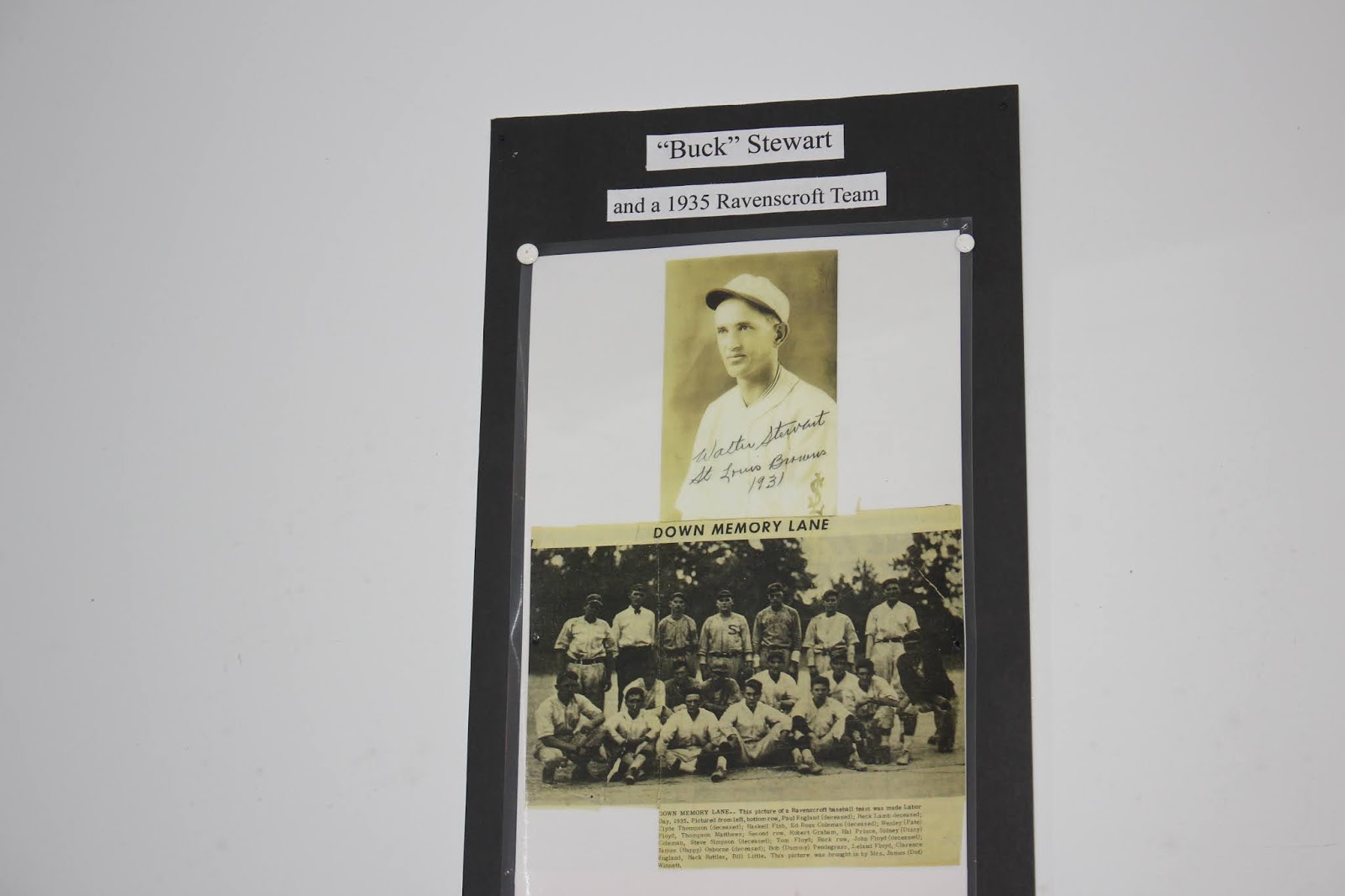
They also had a nursing school. They focused on liberal arts as well as sciences. They had sports teams and debate team. The school produced two pro baseball players!
Above: Earl Webb was one of the record setting pro baseball players that went to Pleasant Hill school. Below is a photo of the book on his sports career.
Below: Buck Stewart was a second pro baseball player that came from Pleasant Hill Academy.
Above: mannequins model two examples of graduation dresses made by students. Sharon explains to me. The girls had to make their own graduation outfits and what a fine job these two did!
Above and below: examples in Pioneer Hall of a boys dormitory room.
above and below: Pioneer Hall example of a girls dorm room.
Above: a closer look at a dress made from fabric salvaged from printed feed sacks. This was a common practice back in that day. My grandmother and aunts have told me about their mom making their clothes from feed sacks. Nothing went to waste! You can still buy printed feed sack material at Cumberland Mountain General Store.
The Community Education-The Chautauquas
My writing here has failed to illustrate an important point adequately.
The extreme privation of the people in the surrounding countryside. Dr. May pointed out that in cities children got free health care. She also pointed out that in more affluent areas the rich often donated their excess clothing and goods to charity to help the less fortunate. Out here in this wilderness everyone was too poor to do much to help one another. Many adults in the area either never had any education or very little. Children were fortunate to even have a school and get to attend it three months out of each year.
A movement existed in the United States from the 1870s to the late 1920s or 30s of holding "chautauqua meetings". These were sort of a tent revival with a weeks worth of inservices and entertainment. They were held to educate all comers.
They helped with many areas such as health and sanitation, nutrition, home economics, agriculture, crafts, cultural arts, music, Bible classes, and many more topics. Dr. May and her helpers held their chautauquas around the Cumberland Plateau. One of the places I can remember mentioned was Hanging Limb! It is way out in Overton County! The meetings were fun, but exhausting and very helpful, useful pursuits. They made them fun and had the participants all involved in dramas, musicals, and they'd have a big fellowship dinner at the end.
The thinking back then tended to be that idle pastimes were frowned upon.
Consequently meeting educational needs of the community made the area better and was a way to have fun in the process.
Miss Alice Adshead, the registered nurse who helped Dr. May started a nursing school. It graduated around five hundred women who were sent back into their communities to help right where they lived. One of the things that motivated this was the lack of help. They knew that by educating trained nurses
they multiplied their efforts exponentially.
One of my favorite parts of Dr. May's story is when she is called to a home to tend a sick child. She is taking stock of the surroundings and finds the parents attentive, friendly and the household in better condition than most. She at some point realizes this young couple are two of her students who graduated from Pleasant Hill Academy and got married! It had to feel marvelous to finally start to see the fruits of her labors. What a reward!
The Out Clinics
One part of Dr. May's vision for the area was to be taking care of the entirety of Cumberland County. One of the ways she accomplished this starting out was to set up what she called "out clinics". She had them in the following places:
Pilot Knob (Toddtown)
Neverfail
Mayland
Big Lick
Burgesstown( over near the Old Mail Road)
Ravenscroft
Genesis
Ozone
They saw people for all sorts of ailments. Birth control clinics were conducted also. Mother and well baby check ups were conducted monthly.
The only structure still known to be standing is the tiny shack out at Toddtown. It stands in a clump of trees surrounded by weeds.
Below is an image of the map that shows the locations of the out clinics.
Dr. May's Vision & Legacy
Dr. May dared to dream big. She wanted to see a future for the area where there existed a community hospital and access to medical care. She also envisioned a school, and in her later years assisted living and nursing home care facilities.
It was not a dream that came true all at once,but with each bit of progress made it seemed to inspire her to hope for and work toward more. She was a woman of strong faith and surrounded herself with like minded persons. Over the course of time Pleasant Hill and Cumberland County grew to fulfill the dreams and dearest wishes of the Doctor Woman. Today there stands in Crossville a fine modern hospital. Pleasant Hill has a school to this day. Uplands is the assisted living retirement facility. Wharton Nursing Home is for the long term care of residents who are in their later years unable to do for themselves. The Church of Christ is there still holding services by Rev. Lyle Weible, Sharon's husband. Tuberculosis sanatoriums are a thing of the past thanks to antibiotics, testing and screening by our public health departments. The Van Dyk sits abandoned and decaying. The Grab was the thrift store run by the school. It still exists to this day! I passed it on my drive out to Pleasant Hill. It now sits along highway 70. The community building is still there and still serves the same function. Dr. May's house Yonside is still sound, but right now is unoccupied. It is 85 years old this year.
Dr. May did not bear any children of her own, but she is figuratively the mother of many! It would be interesting to know how many lives and families were positively impacted by her care and by the school at Pleasant Hill.
Pioneer Hall-- From Dormitory to Museum
Pioneer Hall started off as a dormitory building for the students.
Today it stands as a museum and a way to remember the way things were. It helps preserve a fragment of the past. It is a three dimensional history book. The story is told in displays and furnishings as the pages of the book.
A visit here fleshes out the words of the Doctor Woman book like nothing else can. The dormitory rooms show what the boys and girls rooms were like. They have a display of the doctors office, general store, arts and crafts, the Dodge family items such as a desk and a quilt. There is a display of the office. The living general quarters downstairs. A display upstairs of what a kitchen or home of the times was like. It is fascinating to a baby boomer like me. I still recall using many of the items displayed. I had to chuckle when Sharon pointed out to me a World War II era pressure cooker with Frankensteinian looking wing nuts and bolts. She remarked how it scared her. I told her I learned to can on one of those. Seriously. My mother in law taught me to use one. It is in the will and brother in law James has spoken for it! It doesn't scare me, because I was accustomed to it. I still use a hoosier cupboard daily. I consider myself an oddity in today's world.
Above: The old WW2 Pressure canner.
Above: A wood cook stove. A water pump. A whole assortment of kitchen implements. I even see the damper of the wood stove!
Above: More kitchen display. I see an old kitchen aid stand mixer. I see leather britches beans strung up.
Above: Pretty kitchen curtains. They look vintage 1930s.
Above: kitchen table and breadbox and even a wooden high chair. We still have a wooden one that went through my mother in law's four sons, six grandchildren and numerous great grandkids!
My Pioneer Hall tour was very satisfying and made even more so by the added touches given by Sharon Weible. She took me round Pleasant Hill and helped me get oriented so I could continue my day of exploring. I wanted to have the fullest experience I could. She was wonderful. I thanked her and parted company with this fine lady. She had things she needed to attend to in her day.
Conclusion
Once I was on my own I put my camera round my neck and set off walking around the grounds of Pioneer Hall. It sits on a hilly slope. Across a ravine sits the principal's house. It is now a private residence. The thing that drew me away almost at once was the lower part of the lawn. It sits just below that bluff and was awash with the colors of this season. I call this the Season of Purple and Gold when the goldenrod and purple New York ironweed come into flower. Down there was a wild riot of burr rushes, spotted jewelweed, goldenrod, mist flower, and New York ironweed. I stood there enjoying the wildflowers of late Summer. I looked and could see tiny butterflies and bees. I saw and heard three hummingbirds drinking nectar from the flowers. They would fly and sip and sit down to rest on a tiny branch of a bramble bush.
Above: the Paul Revere bell at Pioneer Hall
Above: Looking across the back of the grounds at the principal's house and the bluff.
Above: The flowers are calling me. New york ironweed and goldenrod
Above: purple mist flower and butterfly
Above: beautiful jewelweed
Above: rear view of Pioneer Hall and the fire escapes
Above: red morning glories
I walked further and saw a bridge I had to inspect.
I also saw tiny red morning glories and blue ones as well.
The skies were blue and the sun was coming out. The wind blew a nice breeze across the grounds. I made a complete circle of the place.
Above: Jewelweed Memorial bridge. It passed inspection!
I finally headed to my jeep and drove the route Sharon had taken me on. My first stop was the church. I walked around the grounds admiring the beauty of the place. I was drawn to the bell tower out front. I looked at the bottom of it and the words from Jesus' prayer for unity of believers jumped out at me. That They May All Be One. John 17:21. The flowers and butterflies in the flower garden surrounding it were stunning. A feast of color and texture for the eyes as well as sweet smelling for the nose.
Above: Church of Christ at Pleasant Hill
Above: Bell tower words That They May All Be One.. John 17:21. Jesus' prayer for unity. Oh how we need this today!
Above and below: lovely flowers around the bell tower and a butterfly
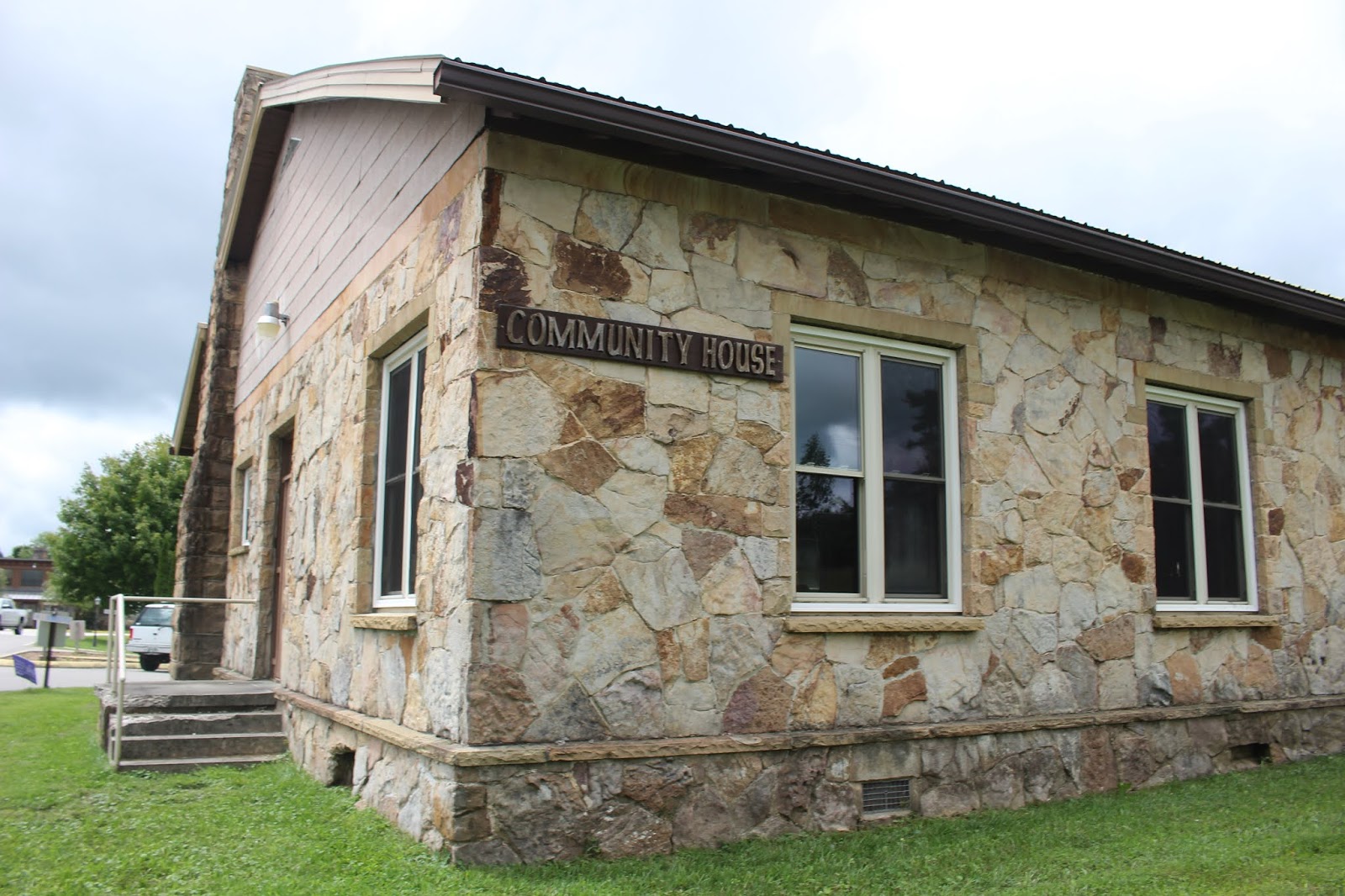
Above: community building
above: May Peace Prevail on Earth.
I walked round the rest of the garden at the side of the church. The bells came on and began to play hymns. I walked past the bell tower and over toward the community building. I wanted to see the front and get a photograph. Standing before the building was a memorial post placed by some friend or family member. It said all around it in four different languages. May Peace Prevail On Earth. The next thing I knew I was overcome by the Holy Spirit's conviction. Oh how far I have missed the mark on the peace thing. Oh how far our country has missed the mark when it comes to peace and unity. I found myself weeping openly.
I was overcome. I wasn't expecting a moral lesson, but I got one.
I woke today and prayed and confessed my sins and shortcomings to the Lord. I asked forgiveness. I spent time in my devotional life as I should. I have reordered my priorities. It seems the Lord is using the witness of Dr. May Cravath Wharton and her fellow believers at Pleasant Hill to this day to reach people for him. Be it lost sinners or those who have allowed themselves to be drawn aside from their first love as I had. The American Missionary Association lasted from its founding September 3, 1846 til the United Church of Christ restructured and it was absorbed into the Justice and Witness ministries in 1999.
Follow Up
I have completed part 2 with detailed directions for how to line up a tour of Pioneer Hall. I have also prepared directions for a driving tour as well as hiking directions. Here is Part 2
Below I am including a music video of the hymn that Mr. Teddy Wharton had sung to him by a student, Flora when he was just about to depart this life. It is very moving. Oh Love That Will Not Let Me Go. written by Rev. Dr. George Matheson. The Doctor Woman of the Cumberland's surely devoted her life to God's calling for her.